


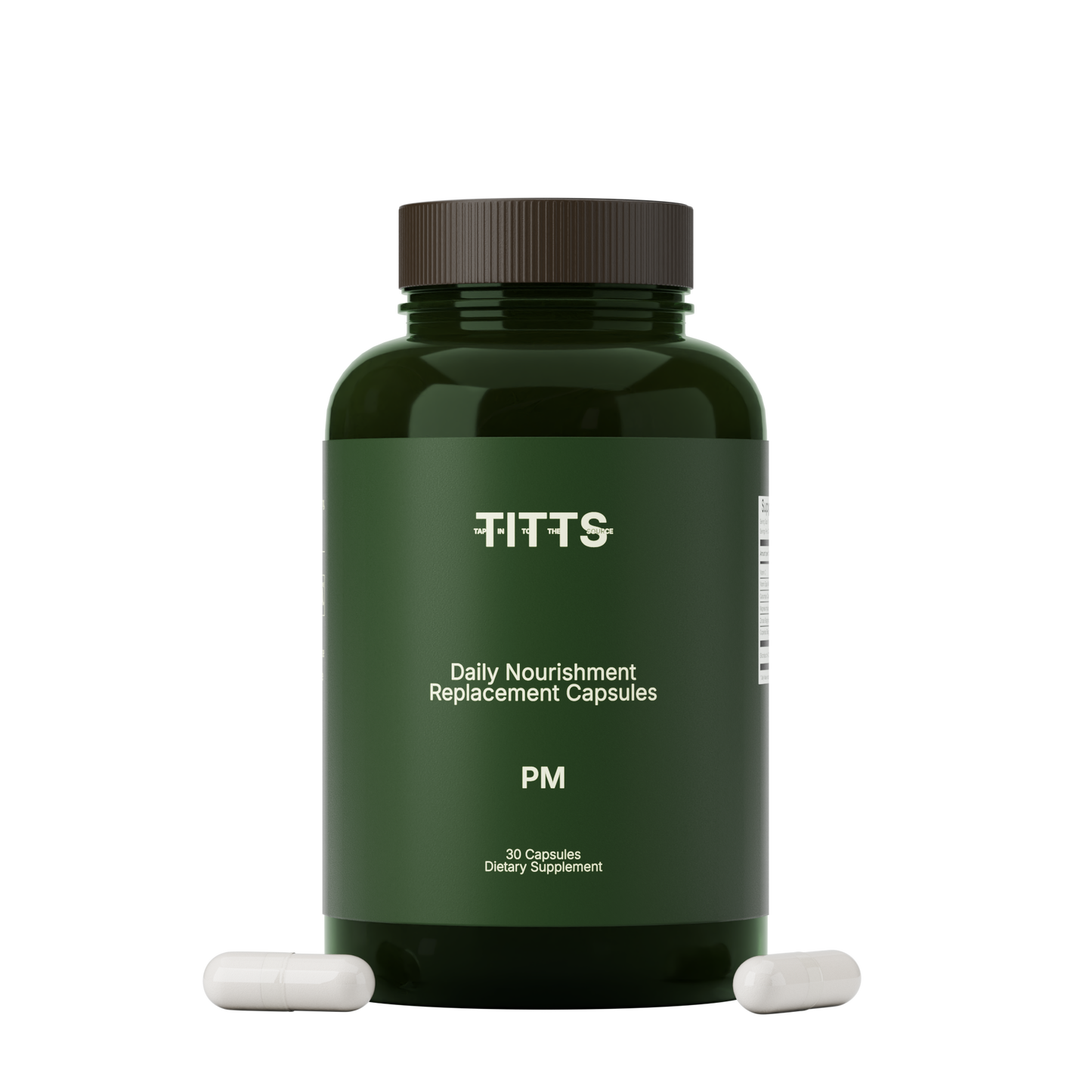
TITTS® Daily Nourishment Replacement Capsules
TITTS® Daily Nourishment Replacement Capsules
- 2 bottles every 4 weeks (AM & PM)
- FREE avg 2-day shipping today
- Pause or cancel anytime
- 30-day money back guarantee

TITTS® Daily Nourishment Replacement Capsules

Your body wants balance.
Multivitamins are not just gross, they're dangerous. Legacy supplement companies juice them up with megadoses that are basically marketed to compensate for poor diet, but really just throw your body off balance over time and can lead to serious health risks.
It's no wonder you never hear about someone feeling better as a result of taking a multivitamin. Throwing supraphysiological, "max tolerable dosage" of nutrients and especially minerals at the body is a recipe for disaster.
(It's almost like they want you to stay sick, but we'll save that for another time)
TITTS is not that. We used historical data to find out how much the soil and ocean is missing of each vitamin and mineral, that it used to have before industrial farming and pollution.
We also looked at what's there that shouldn't be (like toxic heavy metals in the ocean) and factored that into the dosage of the ingredients that counteract them.
And what do you know...
It makes us feel great. No weird brain fog, jitters, or other uncomfortable feelings. Just benefits that stack and multiply over time.
TITTS... is the tits.
It's the multi-vitamin, multi-mineral support capsule for everyone.
Even people who shouldn't need one.
AM
Hormone-like regulator of immune function, bone health, and metabolic signaling.
Indoor lifestyles, sunscreen use, and latitude dramatically reduce sun-derived vitamin D.
~250% RDA approximates natural sun exposure for modern individuals without approaching toxicity.
Directs calcium into bones and away from arteries.
Low intake of fermented foods and grass-fed dairy has nearly eliminated K2 from modern diets.
Matches amounts shown to activate osteocalcin and MGP without excess.
Thiamine is essential for converting carbohydrates into usable cellular energy and for proper nerve signaling.
Modern diets rely heavily on refined grains, which have most thiamine removed. Chronic stress and high carbohydrate intake also increase thiamine demand.
5 mg provides ~400% RDA to compensate for low dietary density and increased metabolic demand without approaching pharmacologic levels.
Riboflavin supports mitochondrial energy production and is required to activate other B vitamins.
Riboflavin content has declined in vegetables due to soil depletion and rapid crop growth. Many people also consume fewer dairy and organ foods.
Supra-RDA ensures adequate cellular activation of energy pathways and supports antioxidant recycling in a higher-stress modern environment.
Supports cellular energy (NAD/NADH), DNA repair, and metabolic regulation.
Although enriched grains provide some niacin, organic and whole-food diets often avoid fortified foods. Chronic inflammation increases NAD turnover.
Set at ~100% RDA to replace baseline needs without flushing or excessive methyl demand.
Required for coenzyme A production, fatty acid metabolism, and adrenal hormone synthesis.
Food processing and long storage reduce pantothenic acid content. Chronic stress increases adrenal utilization.
2× AI reflects higher stress load and modern energy demands while remaining physiologically conservative.
Involved in neurotransmitter synthesis, amino acid metabolism, and magnesium utilization.
Refined foods remove B6, and high protein intake increases B6 requirements. Some people have impaired conversion to the active form.
~300% RDA ensures functional sufficiency, especially for nervous system support, without approaching neurotoxic ranges.
Supports fat metabolism, glucose regulation, and keratin production (skin, hair, nails).
Modern hygiene and antibiotics reduce biotin-producing gut bacteria. Egg avoidance also lowers intake.
Matches AI to restore baseline levels without unnecessary excess.
Critical for DNA synthesis, methylation, and detoxification pathways.
Soil depletion and elevated CO₂ reduce folate in plants. Many people avoid fortified grains, and environmental toxins increase folate demand.
100% RDA using the bioactive form ensures adequacy without masking B12 deficiency or overmethylation risk.
Supports nervous system integrity, red blood cell formation, and methylation.
B12 absorption is inherently poor and further impaired by low stomach acid, stress, aging, and sanitized food systems.
Although ~4000% RDA on paper, this dose compensates for <2–3% absorption and reliably delivers physiologic needs without toxicity risk.
Antioxidant, collagen synthesis, immune defense, adrenal support.
Modern produce contains significantly less vitamin C than historical equivalents. Pollution and stress increase turnover.
~3× RDA restores plasma saturation closer to ancestral intake levels without GI irritation.
Required for thyroid hormone production and metabolic rate regulation.
Soil iodine depletion, non-iodized salt use, and reduced seafood intake have reintroduced deficiency risk.
100% RDA replaces what modern diets often lack without exceeding safe upper ranges.
Supports thyroid hormone conversion, antioxidant enzymes, and mercury detoxification.
Selenium content depends on soil, which is uneven globally. Mercury exposure increases selenium demand.
~180% RDA ensures functional sufficiency in the presence of environmental toxins while remaining well below toxicity thresholds.
Improves insulin sensitivity and glucose metabolism.
Refined carbohydrates increase chromium excretion, and modern diets lack whole grains and organ meats.
Matches male AI and exceeds female AI to account for higher glycemic load in modern diets.
Supports enzymes involved in sulfur amino acid metabolism and detoxification.
Lower legume intake and depleted soils reduce exposure.
100% RDA restores baseline enzymatic function.
Supports bone formation, antioxidant enzymes, and connective tissue.
Refined grains and depleted soils reduce intake.
Near AI range to support connective tissue without risking accumulation.
Supports bone health, hormone regulation, and vitamin D utilization.
Fruit and soil boron content has declined; modern intake is often <1 mg/day.
Matches estimated ancestral intake and improves mineral metabolism.
PM
Supports bone strength, muscle contraction, nerve signaling, and heart rhythm regulation.
Vegetables contain less calcium due to soil depletion, many people avoid dairy, and modern water filtration removes naturally occurring calcium that historically contributed to daily intake.
A partial dose was chosen to replace what modern diets often lack while avoiding the absorption interference and imbalance that can come from high-dose calcium supplementation.
Protects cell membranes from oxidative damage and supports immune and cardiovascular health.
Traditional diets provided vitamin E from whole foods, seeds, nuts, and grass-fed animal fats. Modern food processing and refined industrial oils strip vitamin E while increasing oxidative stress, raising demand as intake declines.
Set at the full RDA to restore baseline antioxidant protection without interfering with other fat-soluble vitamins or exceeding physiologic needs.
Regulates nervous system tone, muscle relaxation, sleep quality, and insulin sensitivity.
Soil depletion, refined foods, stress, caffeine, and sweat losses make magnesium one of the most common deficiencies.
Delivers ~70–100% RDA in a well-absorbed form to restore intracellular magnesium without laxative effects.
Supports immune function, hormone production, skin repair, and neurotransmission.
Soil depletion and high-phytate diets reduce zinc absorption.
Near RDA to restore baseline without suppressing copper balance.
Essential for iron metabolism, connective tissue strength, and antioxidant enzymes.
Low organ meat intake and zinc-heavy diets create copper imbalance.
Rebalances zinc intake and restores RDA without excess.
Supports collagen synthesis, bone integrity, and skin elasticity.
Modern water filtration and refined foods remove silicon sources.
Below estimated ancestral intake but sufficient to support connective tissue repair.
Supports nighttime tissue repair, collagen synthesis, and antioxidant recovery.
Same factors as daytime depletion; repair processes increase nighttime demand.
Complements AM dose for sustained plasma levels without overstimulation.
Try TITTS for 30 Days
Your first order comes with a 30-day guarantee. Love it or get your money back, no questions asked.